
Education Corner
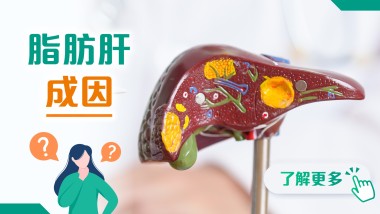 Causes of Fatty Liver
 What is fatty liver? Why does it occur? Fatty liver refers to the abnormal accumulation of fat within liver cells. When our calorie intake consistently exceeds what the body needs, the liver cannot process the excess in time. As a result, this surplus energy is converted into fat and stored in the liver. Do only obese individuals or people who drink alcohol get fatty liver? No. Even individuals who do not drink alcohol or those who do not appear obese (such as those with a "toffee apple" or "skinny-fat" body shape—slender limbs but with a belly) still have a chance of developing non-alcoholic fatty liver disease (NAFLD). How does a high-sugar, high-fat diet lead to fatty liver? High-Fructose Corn Syrup: Commonly found in hand-shaken beverages, sodas, and packaged sauces. Unlike other sugars, fructose can only be metabolized by the liver. Consuming it in excess directly converts it into liver fat. Refined Carbohydrates: White rice, bread, cakes, and other high-glycemic index foods cause a rapid spike in blood sugar. This triggers a massive secretion of insulin, which converts the excess energy into stored fat. What is insulin resistance? What is its connection to fatty liver? Insulin is responsible for ushering glucose from the bloodstream into cells to be converted into energy. When the body develops insulin resistance, cells lose their sensitivity to insulin, preventing glucose from entering smoothly. Mistaking this for an energy shortage, the body releases more free fatty acids into the bloodstream, which ultimately flow into and accumulate in the liver. This is why individuals with type 2 diabetes or prediabetes face a significantly higher risk of developing fatty liver. Why is abdominal obesity particularly dangerous? Although slim individuals (the "skinny-fat" profile with slender limbs but a prominent belly) can still develop fatty liver, central obesity (excess visceral fat) remains the primary risk factor clinically. Visceral fat is highly active; it continuously releases inflammatory factors and fatty acids that flow directly into the liver via the portal vein, worsening fat deposition in the liver. Does a lack of exercise affect the liver? When we sit for prolonged periods and lack moderate-to-high-intensity exercise, our muscles' ability to consume glucose declines. A slowed metabolism means the body burns fat less efficiently. With nowhere else to go, the excess calories naturally pile up in the liver. Fatty liver typically shows zero symptoms in its early stages and is often only discovered during an ultrasound scan or blood test. If left unchecked over time, the liver may develop inflammation and fibrosis, potentially increasing the risk of liver cirrhosis. Want to know your liver health status? Now is offering the FibroScan® . Click the link below to purchase directly from our online store, or contact us for more details. https://mall.humanhealth.com.hk/products/fibroscan_hhu85
2026.1.8 Nearly 60% of Parents Mistake Meningococcal Group B for the "Common Cold"? Understanding Meningococcal Infection and How to Prevent It
 Get more details In recent months, meningococcal infection has attracted widespread international attention, with the UK experiencing a large-scale outbreak earlier this year. In Hong Kong, as of the end of May this year, 5 cases of invasive meningococcal disease have been recorded, including a 3-year-old boy and a 9-year-old girl, both of whom were in serious condition upon hospitalisation. This highlights that the risk of infection among young children must not be overlooked. With the summer travel season approaching, coupled with overseas students returning to Hong Kong and parents frequently taking their children to high-risk destinations, the public should remain vigilant. Below, Human Health has compiled essential information about meningococcal infection to help you understand and prevent it early. Widespread Lack of Awareness Among Parents — Nearly 60% Mistake It for a "Cold" To gauge Hong Kong parents' and teachers' awareness of meningococcal disease and their attitudes towards prevention, the Hong Kong Association for Early Childhood Educators interviewed 300 parents and teachers in May this year. The results are worrying: Hong Kong parents travel frequently, with 86% of surveyed parents having taken their children abroad in the past year, 64% of whom fall into the "high-frequency traveller" category, travelling either monthly or quarterly. However, parents' average awareness score for meningococcal disease was only 3.84 out of 10 — a notably low level. Nearly 60% of parents mistakenly regarded the disease as a "common cold," thereby overlooking its high fatality rate and risk of long-term complications. This gap in awareness directly affects vaccination intentions. The survey revealed that up to 78% of parents had never had their children vaccinated against meningococcal disease, while a further 38% were completely unaware that a preventive vaccine even existed. Condition Can Deteriorate Rapidly Within 24 Hours What makes meningococcal infection so dangerous is precisely how "swiftly it strikes and progresses." Early symptoms resemble those of a cold, patients may only experience loss of appetite, fever, nausea, or vomiting. Combined with young children's limited ability to express themselves, diagnosis is more difficult than in older children, and parents may easily underestimate the situation. However, the condition can deteriorate rapidly within 24 hours, presenting with haemorrhagic rash, neck stiffness, photophobia, and even seizures and in severe cases, it can be fatal. Medical data show that the mortality rate of this disease reaches 10 to 15%, and among survivors, about 20% will suffer serious complications, including amputation, deafness, brain damage, and intellectual impairment with lasting consequences. Cases Doubled Last Year, with Group B Accounting for Over 70% Looking back at 2025 data, Hong Kong recorded 11 cases throughout the year, more than double the 5 cases in 2024. Of these, 73% were caused by Meningococcal Group B, and approximately 22% (4 cases) were critically ill and required admission to intensive care. Notably, this disease poses a particularly severe threat to infants and young children. According to the Global Burden of Disease (GBD) Study 2021, meningitis has the highest fatality rate among infants and young children (especially neonates and those under 5 years old). Among patients under 20 years of age, children under 5 accounted for approximately 81% of deaths. This clearly shows that the younger the child, the higher the risk, a fact parents must not overlook. Two Types of Vaccines Complement Each Other — They Are Not Interchangeable Many parents may assume that once their child has been vaccinated, they can rest easy. However, there is an important concept that must be clarified: the Meningococcal Group B vaccine and the ACWY vaccine offer complementary protection, they do not replace each other. The commonly administered ACWY vaccine covers meningococcal serogroups A, C, W, and Y, but does not include Group B. In other words, even if your child has received the ACWY vaccine, additional vaccination against Group B should still be considered based on individual risk to achieve more comprehensive protection. Data show that both vaccines are approximately 90% effective in preventing meningococcal infection in children, a level of protection that is trustworthy. For high-risk individuals, including travellers heading to endemic or outbreak-affected areas, as well as overseas students on long-term stays. Vaccination should be considered based on the destination's epidemic situation and personal health, in consultation with a doctor. Parents may also wish to take advantage of the summer travel season or the start of the new school year to consult their doctor in advance and arrange appropriate meningococcal vaccination for their children, strengthening protection and reducing the risk of infection and severe illness. Human Health Meningococcal Group B Vaccination Service Rather than regretting missed prevention when infection strikes, build a line of defence for your child's health early. We offer Meningococcal Group B vaccination using the vaccine manufactured by GSK (GlaxoSmithKline) of the UK, suitable for infants from 2 months of age and above (for both males and females). With multiple clinic locations across the city, we make it convenient for you to book a nearby appointment. Prior to vaccination, our professional medical team is also available to provide consultation and assess suitability, so you can make your decision with confidence. To learn more or book an appointment, please visit the link below or get in touch with us. Get more details
2026.1.7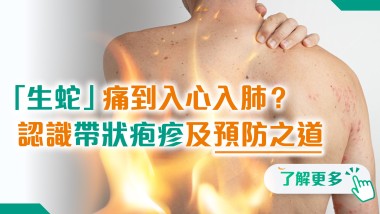 Suffering Unbearable Pain from "Shingles"? Understanding Herpes Zoster and How to Prevent It
 Get more details Recently,a famous dentist and singer publicly shared his experience of developing "shingles," once again drawing public attention to this condition. After suffering an Achilles tendon rupture and a hand injury, he underwent surgery. During his recovery, due to insufficient rest, he suddenly felt a needle-like pain on the side of his waist one night. The next day, a large patch of red rash quickly appeared, which later developed into a persistent, "electric shock-like" nerve pain. In fact, such experiences are far from uncommon—shingles is quite prevalent, and the pain it brings often exceeds what most people imagine. Below, Human Health has compiled important information about "shingles" to help you understand and prevent it early. What Is "Shingles"? The medical name for "shingles" is Herpes Zoster, caused by the Varicella-Zoster Virus—the very same virus responsible for chickenpox. After a person contracts chickenpox and recovers, the virus does not completely leave the body. Instead, it lies dormant within the nerve ganglia. Later on, when the body's immunity weakens, the virus may become active again, spreading along the nerves to the skin and forming a band-like distribution of red rashes and blisters—this is "shingles." In other words, anyone who has had chickenpox carries this virus in their body and may develop shingles at some point in their life. Statistically, about one in every three people will experience shingles at some stage of their life. Why Does It "Reactivate"? Who Is at Higher Risk? The fundamental cause of shingles lies in a decline in immunity. This case is a classic example: surgery, trauma, exhaustion, and lack of sleep can all weaken the body's defences, giving the dormant virus an opportunity to strike. Generally speaking, the following individuals are at relatively higher risk: people aged 50 and above, as immunity naturally declines with age; those who have recently undergone surgery or are recovering from a serious illness. People under prolonged stress or lacking sleep and those with weaker immune systems or undergoing immunosuppressive treatment. It is worth noting that shingles is not exclusive to the elderly. Younger people can also be affected, as this case demonstrates. What Symptoms Should You Watch Out For? The symptoms of shingles typically appear in stages. In the early phase, the affected area may first experience a stinging, burning, or itching sensation, which some people mistake for a muscle strain or a common skin problem. Over the following days, a band-like rash appears on one side of the body, gradually forming blisters, commonly on the waist, chest and back, face, or around the eyes. This may be accompanied by mild fever, headache, and fatigue. What troubles patients most is often not the rash itself, but "postherpetic neuralgia." Even after the skin rash has healed, that electric shock-like, burning nerve pain may persist for weeks or months. And in some severe cases, even for years, profoundly affecting daily life, sleep, and emotional well-being. Furthermore, if shingles occur near the eyes or ears, it may affect vision or hearing, and should not be taken lightly. Can Shingles Be Prevented? The answer is yes. In addition to maintaining healthy lifestyle habits, getting adequate sleep, eating a balanced diet, exercising moderately, and learning to manage stress in order to keep your immunity strong, the most direct and effective method of prevention is to receive the shingles vaccine. The vaccine can effectively reduce the risk of developing shingles, as well as lower the likelihood and severity of postherpetic neuralgia later on. For those aged 50 and above, or for individuals with weaker immune systems, early vaccination is especially worth considering. Human Health Shingles Vaccination Service Rather than waiting until the pain arrives to feel regret, it is better to build a line of defence for your health early on. Human Health offers a shingles (Herpes Zoster) vaccination service, administered by a professional medical team, with multiple branches across various districts for convenient, nearby vaccination. Before vaccination, our medical staff can also provide a consultation to assess your suitability, allowing you to make an informed and confident decision. To learn more or to book a vaccination, please feel free to contact us. Get more details
2026.1.7 Is HPV a greater threat to men?
 HPV is often mentioned as a cause of cervical cancer, so it may seem unrelated to men. But is that really the case? How common is HPV infection among men? Can HPV cause diseases in men? Yes. HPV is not a disease that affects only women. It can cause a variety of diseases in men, the most common being genital warts, also known as “cauliflower.” These are mainly caused by low-risk HPV-6 and HPV-11. Once genital warts appear, they often recur, with a recurrence rate as high as 70%. In addition to genital warts, persistent infection with high-risk HPV can also lead to several cancers, including anal cancer, penile cancer, and oropharyngeal cancer. About 90% of anal cancer cases are actually related to HPV, and penile cancer and oropharyngeal cancer can also be caused by persistent HPV infection. HPV can also cause head and neck cancer, oral cancer, and other diseases. The impact of HPV on men’s health should not be ignored. Why is HPV infection more dangerous for men? For men, the danger of HPV is not only that it can cause disease, but also that infection often has no obvious symptoms. Many people do not know they are infected, and may unknowingly pass it on to their partners. For example, genital warts are highly contagious, and if you have close contact with an infected person, the chance of infection can be as high as 70%, which may put a partner’s health at risk. On the other hand, men do not currently have routine screening methods like women’s cervical screening, so high-risk infections such as head and neck cancer or anal cancer are harder to detect early. Also, unlike women, who can often clear HPV on their own after infection, more than 90% of men do not produce enough antibodies after infection, making persistent infection more likely and increasing the risk of cancer. Head and neck cancer has a higher incidence in men in Hong Kong than cervical cancer does in women, and there is currently no routine screening. Most patients only notice it at a late stage. The five-year survival rate for male head and neck cancer is about 31.9% to 89.5%, so it can be quite deadly. Even if you do not smoke or drink often, and are relatively young, you can still develop head and neck cancer due to HPV. HPV-related oropharyngeal cancer can have an incubation period of 10 to 30 years, and about 30% of oropharyngeal cancers worldwide are caused by HPV infection. Anal cancer, like head and neck cancer, is often only noticed at a late stage, with many people initially thinking it is just hemorrhoids and ignoring it. Anal cancer has a clear association with HPV infection, especially in people who have had anal warts, anal sex, smoke, have weakened immunity, or have long-term anal inflammation. In addition, the prevalence of HPV infection is higher in men than in women. On average, one in every two men may be infected with HPV. Since the risk of infection does not decrease with age, and more than 90% of men do not produce enough antibodies after exposure, the threat of HPV-related oropharyngeal cancer in Hong Kong is even higher than the global average. Therefore, HPV should not be seen as a disease that affects only women. For men, it can also cause long-term health effects, and even more serious consequences. Can men get the HPV vaccine? Is it safe? Yes, absolutely. It is highly worth considering, because vaccination is currently the most effective method. Since men often have no obvious symptoms after infection and there are no routine screening methods, vaccination can effectively reduce the risk of infection and protect both themselves and their partners. In general, vaccination works best before sexual activity begins, but even adults or people who are already sexually experienced can still benefit. The 9-valent HPV vaccine covers most HPV-related cancers and diseases, and it is suitable for people aged 9 and above. Research has shown that HPV vaccination can prevent nearly 100% of genital warts and high-grade squamous intraepithelial lesions. The HPV vaccine is made using biotechnology as an empty shell that is highly similar to HPV. It contains no viral DNA and does not cause HPV infection, so it is safe to receive. Human Health’s online store also offers HPV vaccination and cervical screening services, which you can choose according to your needs: HPV 9-in-1 Vaccine (3 doses) at designated locations — HK$4,080 HPV 9-in-1 Vaccine (2 doses) at designated locations — HK$2,720
2026.1.7 Do women aged 40 still need HPV prevention?
 Many women have a misconception that the HPV vaccine is only most effective if given before sexual activity begins, so getting it after age 40 is useless. In fact, women aged 40 still need HPV prevention, and vaccination can still provide protection even in adulthood and after age 40. Why do women still need the HPV vaccine after 40? HPV has more than 100 types, and the current 9-valent vaccine can protect against nine high-risk types. So even if you have already been infected with some of them, the vaccine can still help protect you from other types you have not been exposed to. Data also show that women over 27 can still achieve about 90% protection after vaccination, so there is no need to worry about “wasting” the three doses. Some people also think that once they have given birth, they no longer need vaccination. In fact, vaccination is only not recommended during pre-pregnancy planning and pregnancy. Studies show that the risk of HPV infection in women who have given birth is twice that of women who have never given birth, and childbirth wounds can increase the chance of HPV infection, raising the risk of precancerous changes. In addition, the prevalence of high-risk HPV also appears to be higher in women aged 46 to 50, showing that HPV is not only a concern for younger women. Therefore, even mothers still need HPV prevention. HPV infection does not depend on age, because as long as there is exposure risk, infection is possible. There is no such thing as “too late” for prevention. Early vaccination, together with regular screening, can better protect your health. What problems can HPV cause for women? Can infection threaten a baby’s health? HPV can cause many health problems in women. The most serious is cervical cancer: 99% of cervical cancer cases are associated with HPV infection, and HPV types 16 and 18 account for more than 70% of cervical cancer cases. After persistent infection with high-risk HPV, cervical intraepithelial neoplasia (CIN) may develop within 5 years, and at least one in ten HPV infections may persist and develop into cancer. In addition, genital warts caused by low-risk HPV types 6 and 11 can appear as small growths or lumps near the vulva, vagina, anus, and cervix, and even after treatment they have a high chance of recurring. Persistent infection with high-risk HPV may also lead to vulvar cancer, vaginal cancer, anal cancer, and oropharyngeal cancer. Most infected people have no symptoms, but may carry the virus for life, so regular screening is recommended. If I already have regular cervical cancer screening, do I still need the vaccine? Yes. Screening and vaccination provide dual protection against cervical cancer, and the two complement each other. Screening can only detect problems and cannot prevent infection; it checks whether cell changes or precancerous lesions already exist, so it helps with early detection, but it cannot stop new HPV infections from occurring. The vaccine, on the other hand, helps prevent HPV infection and builds immune protection, so it is active prevention. Even if screening results are normal, you should still watch for cervical cancer symptoms and seek medical attention when appropriate. Also, if you have already received the HPV vaccine, it is still recommended that you continue regular Pap smears or HPV testing so that your cervical health is protected more comprehensively. The best strategy for preventing cervical cancer is the combination of vaccination and screening. Doing only screening without vaccination cannot prevent new HPV infections, while doing only vaccination without screening is not enough because the vaccine does not cover all HPV types and cannot treat existing infections. Women should undergo regular cervical screening after becoming sexually active. Screening plus vaccination provides more complete protection. Human Health’s online store also offers HPV vaccination and cervical screening services, which you can choose according to your needs: HPV 9-in-1 Vaccine (3 doses) at designated locations Pap smear / cervical cytology test
2026.1.7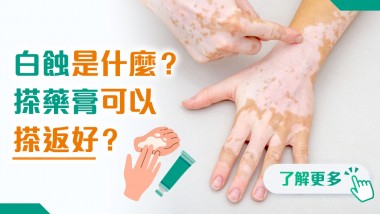 What is white spot disease? Can applying cream make it better?
 What is Vitiligo?Vitiligo (also known as white spot disease) is a common skin condition where the immune system attacks melanocytes, causing white patches on the skin. Though non-contagious, it often affects patients' confidence due to visible changes. Can vitiligo be treated with creams? This article details its causes, treatments (like steroids, phototherapy, and JAK inhibitors), repigmentation timelines, and funding options. What Causes Vitiligo? Vitiligo mainly stems from autoimmune dysfunction, where immune cells mistakenly attack pigment-producing melanocytes. Trigger factors include genetics (20-30% family history), chronic stress, skin trauma like sunburn (Koebner phenomenon), comorbidities such as thyroid issues or type 1 diabetes, and onset before age 30. What Are Treatments for Facial Vitiligo Patches? For facial or neck patches, dermatologists tailor strategies by severity. Topical Steroid Treatment These common first-line options regulate overactive immunity, aiding melanocyte regeneration and pigment return. Doctors start low-dose, applying cream 1-2 times daily to patches. Effective for some after months, but long-term use risks skin thinning, stretch marks, folliculitis, or telangiectasia—especially on the face, requiring close monitoring. Phototherapy UVB sessions (2x weekly, minutes each) for 3-6+ months can halt spread and repigment stable patches. Ideal for stable vitiligo, but risks include burns, aging, and minor skin cancer long-term—needs doctor oversight and sunscreen. JAK Inhibitor Creams These newer non-steroid topicals suit thin skin (face, neck, eyes). They target immune pathways safely with fewer side effects like atrophy. Repigmentation often appears in months; consult a dermatologist early for personalized plans. Are JAK Inhibitors Safe? How Do They Differ from Steroids? JAK inhibitor creams—the first FDA/EMA/HK-approved non-steroid vitiligo topicals—are increasingly prescribed in Hong Kong. They precisely protect melanocytes without steroid side effects (thinning, marks). Trials show >75% repigmentation in over half of facial cases after months, safe for ages 12+ even on sensitive areas. How Long Does Vitiligo Recovery Take? Can It Be Fully Cured? Full cure is rare, but most control spread and repigment with treatment. Early intervention in active phases yields best results. Courses last months to 2 years; faces repigment faster due to high follicle density. Are Vitiligo Treatments Expensive? Are There Funding Options? Expenses range HK$ hundreds to thousands monthly, varying by drugs/phototherapy. Patient groups offer JAK cream subsidies for eligible cases—ask dermatologists during follow-ups for qualifications and golden treatment windows.
2026.1.6