
Education Corner
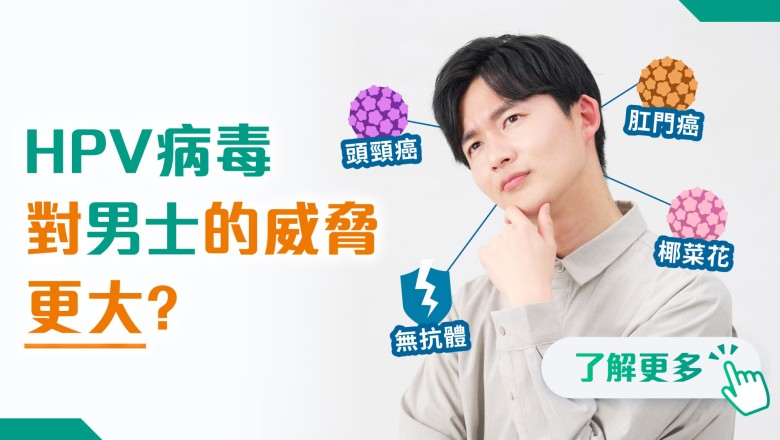
HPV is often mentioned as a cause of cervical cancer, so it may seem unrelated to men. But is that really the case? How common is HPV infection among men?
Can HPV cause diseases in men?
Yes. HPV is not a disease that affects only women. It can cause a variety of diseases in men, the most common being genital warts, also known as “cauliflower.” These are mainly caused by low-risk HPV-6 and HPV-11. Once genital warts appear, they often recur, with a recurrence rate as high as 70%.
In addition to genital warts, persistent infection with high-risk HPV can also lead to several cancers, including anal cancer, penile cancer, and oropharyngeal cancer. About 90% of anal cancer cases are actually related to HPV, and penile cancer and oropharyngeal cancer can also be caused by persistent HPV infection. HPV can also cause head and neck cancer, oral cancer, and other diseases. The impact of HPV on men’s health should not be ignored.
Why is HPV infection more dangerous for men?
For men, the danger of HPV is not only that it can cause disease, but also that infection often has no obvious symptoms. Many people do not know they are infected, and may unknowingly pass it on to their partners. For example, genital warts are highly contagious, and if you have close contact with an infected person, the chance of infection can be as high as 70%, which may put a partner’s health at risk.
On the other hand, men do not currently have routine screening methods like women’s cervical screening, so high-risk infections such as head and neck cancer or anal cancer are harder to detect early. Also, unlike women, who can often clear HPV on their own after infection, more than 90% of men do not produce enough antibodies after infection, making persistent infection more likely and increasing the risk of cancer.
Head and neck cancer has a higher incidence in men in Hong Kong than cervical cancer does in women, and there is currently no routine screening. Most patients only notice it at a late stage. The five-year survival rate for male head and neck cancer is about 31.9% to 89.5%, so it can be quite deadly. Even if you do not smoke or drink often, and are relatively young, you can still develop head and neck cancer due to HPV. HPV-related oropharyngeal cancer can have an incubation period of 10 to 30 years, and about 30% of oropharyngeal cancers worldwide are caused by HPV infection.
Anal cancer, like head and neck cancer, is often only noticed at a late stage, with many people initially thinking it is just hemorrhoids and ignoring it. Anal cancer has a clear association with HPV infection, especially in people who have had anal warts, anal sex, smoke, have weakened immunity, or have long-term anal inflammation.
In addition, the prevalence of HPV infection is higher in men than in women. On average, one in every two men may be infected with HPV. Since the risk of infection does not decrease with age, and more than 90% of men do not produce enough antibodies after exposure, the threat of HPV-related oropharyngeal cancer in Hong Kong is even higher than the global average.
Therefore, HPV should not be seen as a disease that affects only women. For men, it can also cause long-term health effects, and even more serious consequences.
Can men get the HPV vaccine? Is it safe?
Yes, absolutely. It is highly worth considering, because vaccination is currently the most effective method.
Since men often have no obvious symptoms after infection and there are no routine screening methods, vaccination can effectively reduce the risk of infection and protect both themselves and their partners. In general, vaccination works best before sexual activity begins, but even adults or people who are already sexually experienced can still benefit.
The 9-valent HPV vaccine covers most HPV-related cancers and diseases, and it is suitable for people aged 9 and above. Research has shown that HPV vaccination can prevent nearly 100% of genital warts and high-grade squamous intraepithelial lesions. The HPV vaccine is made using biotechnology as an empty shell that is highly similar to HPV. It contains no viral DNA and does not cause HPV infection, so it is safe to receive.
Human Health’s online store also offers HPV vaccination and cervical screening services, which you can choose according to your needs:
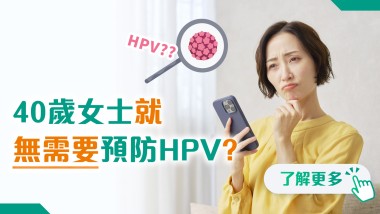 Do women aged 40 still need HPV prevention?
 Many women have a misconception that the HPV vaccine is only most effective if given before sexual activity begins, so getting it after age 40 is useless. In fact, women aged 40 still need HPV prevention, and vaccination can still provide protection even in adulthood and after age 40. Why do women still need the HPV vaccine after 40? HPV has more than 100 types, and the current 9-valent vaccine can protect against nine high-risk types. So even if you have already been infected with some of them, the vaccine can still help protect you from other types you have not been exposed to. Data also show that women over 27 can still achieve about 90% protection after vaccination, so there is no need to worry about “wasting” the three doses. Some people also think that once they have given birth, they no longer need vaccination. In fact, vaccination is only not recommended during pre-pregnancy planning and pregnancy. Studies show that the risk of HPV infection in women who have given birth is twice that of women who have never given birth, and childbirth wounds can increase the chance of HPV infection, raising the risk of precancerous changes. In addition, the prevalence of high-risk HPV also appears to be higher in women aged 46 to 50, showing that HPV is not only a concern for younger women. Therefore, even mothers still need HPV prevention. HPV infection does not depend on age, because as long as there is exposure risk, infection is possible. There is no such thing as “too late” for prevention. Early vaccination, together with regular screening, can better protect your health. What problems can HPV cause for women? Can infection threaten a baby’s health? HPV can cause many health problems in women. The most serious is cervical cancer: 99% of cervical cancer cases are associated with HPV infection, and HPV types 16 and 18 account for more than 70% of cervical cancer cases. After persistent infection with high-risk HPV, cervical intraepithelial neoplasia (CIN) may develop within 5 years, and at least one in ten HPV infections may persist and develop into cancer. In addition, genital warts caused by low-risk HPV types 6 and 11 can appear as small growths or lumps near the vulva, vagina, anus, and cervix, and even after treatment they have a high chance of recurring. Persistent infection with high-risk HPV may also lead to vulvar cancer, vaginal cancer, anal cancer, and oropharyngeal cancer. Most infected people have no symptoms, but may carry the virus for life, so regular screening is recommended. If I already have regular cervical cancer screening, do I still need the vaccine? Yes. Screening and vaccination provide dual protection against cervical cancer, and the two complement each other. Screening can only detect problems and cannot prevent infection; it checks whether cell changes or precancerous lesions already exist, so it helps with early detection, but it cannot stop new HPV infections from occurring. The vaccine, on the other hand, helps prevent HPV infection and builds immune protection, so it is active prevention. Even if screening results are normal, you should still watch for cervical cancer symptoms and seek medical attention when appropriate. Also, if you have already received the HPV vaccine, it is still recommended that you continue regular Pap smears or HPV testing so that your cervical health is protected more comprehensively. The best strategy for preventing cervical cancer is the combination of vaccination and screening. Doing only screening without vaccination cannot prevent new HPV infections, while doing only vaccination without screening is not enough because the vaccine does not cover all HPV types and cannot treat existing infections. Women should undergo regular cervical screening after becoming sexually active. Screening plus vaccination provides more complete protection. Human Health’s online store also offers HPV vaccination and cervical screening services, which you can choose according to your needs: HPV 9-in-1 Vaccine (3 doses) at designated locations Pap smear / cervical cytology test
2026.1.7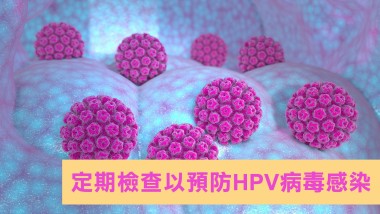 HPV DNA Genotyping Test
 Regular Check-ups to Prevent HPV Infection Is HPV a Virus That Only Affects Women? According to the Centre for Health Protection, studies show that up to 75% of sexually active men and women will be infected with HPV (human papillomavirus) at some point in their lives.While condoms can reduce the risk of transmission, they cannot fully cover all genital skin, meaning unprotected areas may still become infected.HPV can remain dormant for years, and the absence of symptoms does not mean you are free from infection.Getting the HPV vaccine early can help prevent infection by the human papillomavirus. However, as the vaccine cannot protect against all HPV strains, regular cervical screening is still necessary to prevent cervical cancer. What Health Problems Can HPV Cause? Most HPV infections do not cause any symptoms, but in some cases, they can lead to disease.HPV transmitted through skin-to-skin contact can cause common warts on the hands and feet.Sexually transmitted HPV infects the genital and anal areas, causing genital warts (commonly known as “cauliflower warts”).High-risk HPV strains can lead to cancer over time, including cervical cancer, vulvar cancer, vaginal cancer, penile cancer, and anal cancer. How Can I Know If I Have HPV? There are several tests to check for abnormalities in cervical cells.The most common method is the Pap smear test.Another option is the HPV DNA genotyping test, which can detect the presence of specific high-risk HPV types even before cellular changes occur. The First Line of Defense Against Cervical Cancer Although Pap smear screening helps detect cell abnormalities, HPV infection can persist silently for years before progressing to cervical cancer.During this stage, Pap tests may not always identify early changes.Early screening using HPV DNA testing can detect the virus itself before it causes abnormal cell growth, offering a more effective way to prevent cervical cancer. What Can HPV DNA Screening Detect? If HPV is detected:Consult a doctor for further assessment, such as colposcopy, to check for the presence of precancerous cervical cells. If HPV is not detected:This indicates no HPV infection was found in your cervical cells.Nonetheless, you should continue to undergo regular cervical screenings to ensure ongoing protection against cervical cancer. Do I Need to Get an HPV DNA Test Before Vaccination? Testing before vaccination is not mandatory.HPV DNA testing helps identify early cellular changes caused by existing infection, while the HPV vaccine aims to prevent infection from specific HPV types you haven’t yet contracted.However, for individuals who are already sexually active, a preliminary HPV DNA test can be useful to determine if the cervix is healthy and whether any early treatment is required.
2020.10.12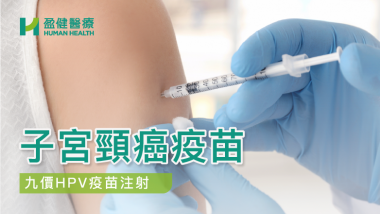 Know more about HPV Vaccine
 more detail for HPV Vaccination What Is the Relationship Between Cervical Cancer and HPV? According to the Hospital Authority’s 2016 data, there are 510 new cases of cervical cancer and 151 deaths each year in Hong Kong.Human papillomavirus (HPV) is one of the major causes of cervical cancer. Women aged 26–30 and 46–55 are at the highest risk of infection. Both men and women can become infected with HPV and develop related diseases.Once infected, HPV can cause the following conditions: Men Women Anal cancer Anal cancer Genital warts (condyloma acuminatum) Genital warts (condyloma acuminatum) May transmit HPV to partner, increasing their risk of cancer or warts Vulvar cancer, vaginal cancer, and cervical cancer How Can Cervical Cancer Be Prevented? Quit smoking and avoid secondhand smoke. Use condoms to reduce the risk of HPV transmission. Undergo regular cervical screening (Pap smear). Get vaccinated with the HPV vaccine (also known as the cervical cancer vaccine). About the Cervical Cancer (HPV) Vaccine The human papillomavirus (HPV) vaccine—also known as the cervical cancer vaccine—is a preventive vaccine that protects against cervical cancer and other HPV-related diseases.Both men and women can receive the vaccine. In Hong Kong, two types of prescription HPV vaccines are commonly available: Quadrivalent HPV vaccine (4-in-1) 9-valent HPV vaccine (9-in-1) Both require prescription and administration under medical supervision.The 9-valent vaccine protects against 9 HPV types responsible for about 80–90% of HPV-related cancers and diseases, making it a more comprehensive choice.It also helps prevent genital warts and can be given to both women and men. Type HPV Types Covered Recommended Age Dosage Schedule Quadrivalent (4‑in‑1) 6, 11, 16, 18 From age 9 (male & female) 9–13 years: 2 doses / 14+ years: 3 doses 9-valent (9‑in‑1) 6, 11, 16, 18, 31, 33, 45, 52, 58 From age 9 (male & female) Before Oct 31, 2016: 9+ years – 3 doses / After Oct 31, 2016: 9–14 years – 2 doses, 15+ years – 3 doses Frequently Asked Questions 1) How many doses are required for the cervical cancer (HPV) vaccine?According to manufacturer guidelines, three doses are administered over six months: at 0, 2, and 6 months (i.e., two and four months apart). 2) Which pharmaceutical company produces the vaccine? Are there new and old versions?The vaccine used is Gardasil 9, produced by Merck & Co. (MSD), USA.There is only one version—the so‑called “new” and “old” batches refer only to packaging differences.All vaccines are legally sourced, original manufacturer products, properly stored and transported, and within valid expiry dates. 3) What’s the difference between two and three doses?According to Hong Kong’s Department of Health, adolescents aged 9–14 only need two doses, while those aged 15 and above should receive three doses to achieve the same level of immunity. 4) Who should get the HPV vaccine?The vaccine is most effective for individuals who have not been infected with HPV.However, women who are sexually active or have given birth are also encouraged to receive it.Because the vaccine protects against at least four HPV types, and most women are not infected with all of them simultaneously, vaccination remains beneficial. 5) Can I get vaccinated during pregnancy?Important notes: You can become pregnant immediately after completing the three-dose vaccination course. Vaccination during pregnancy is not recommended. It is safe to receive the vaccine after childbirth or while breastfeeding. 6) Are there side effects?The HPV vaccine is generally safe.Common mild side effects include redness, swelling, or pain at the injection site, mild fever, headache, or nausea.Individuals who have had severe allergic reactions to any vaccine ingredient should not receive it.If in doubt, consult your doctor.Hong Kong’s Department of Health operates a pharmacovigilance system to monitor vaccine safety. 7) Do I still need cervical cancer screening after vaccination?Yes.Even after vaccination, women should continue regular Pap smear screening, as the vaccine cannot treat preexisting HPV infections or protect against HPV types not covered by the vaccine.
2020.1.1 HPV Vaccination
 *Available in Chi Version Only
2019.11.1 HPV Vaccination
 *Availalbe in Chi Version Only
2018.12.12