
Education Corner
 Hepatitis C
 What is Hepatitis C virus? • Hepatitis C virus (HCV) is a small RNA virus that causes liver damage. Like hepatitis B carriers, some hepatitis C carriers develop chronic hepatitis, liver scarring or liver cancer.• The incubation period is 6-9 weeks (ranges from 2 weeks to 6 months).• A majority of people infected with HCV do not have symptoms or signs. If symptoms and signs occur, they are indistinguishable from those of hepatitis A or hepatitis B virus infections. About 80% of acute infections do not clear the virus and chronic infections ensue.• To test for hepatitis C infection, HCV Ab and HCV RNA are used.• The risk of liver failure and liver-related death from HCV increases for those who are co-infected with human immunodeficiency virus (HIV).Epidemiology• Worldwide, HCV prevalence is directly related to the prevalence of persons who routinely share injection equipment and to the prevalence of contaminated parenteral practices in health care settings.• WHO estimates that 2-3% of world population is chronically infected with HCV.• It has been estimated that less than 0.5% of the general population in Hong Kong carry hepatitis C virus, but the infection rate is higher among injecting drug users. How is Hepatitis C transmitted?Hepatitis C is spread in a similar way as hepatitis B, mainly through blood contact by:• sharing needles or 'works' when shooting drugs,• needlesticks injuries or sharps exposures on the job,• vertical transmission from an infected mother to her baby during labour.Less commonly, a person can get Hepatitis C infection via sexual contact. The risk increases among men who have sex with men, for those who have sexually transmitted infection, engage in rough sex, or are infected with HIV. How to prevent Hepatitis C?There is no vaccine available against hepatitis C. The following preventive measures should be taken to prevent hepatitis C:• Do not shoot drugs. If you shoot drugs, stop and get into a treatment programme. If you cannot stop, never share needles, syringes, water, or 'works'.• Do not share personal care items (e.g. razors, toothbrushes) that are potentially contaminated with blood.• HCV infected persons should not donate blood, organs, or tissue.• Health care worker should always follow routine barrier precautions and should handle needles and sharps safely.• Use latex condoms correctly and every time when you have sex.How to cure Hepatitis C:• HCV positive persons should be evaluated by their doctor for liver disease.• Drugs, such as Interferon, Pegylated Interferon and Ribavirin, can be used to treat the infection. Treatment should take into consideration of severity of disease, contraindications, and likelihood of successful response.Source: https://www.info.gov.hk/hepatitis/english/hep_c_set.htm
2018.7.30 Hepatitis A vaccine
 What is Hepatitis A? • Hepatitis A is one type of viral hepatitis. It usually leads to acute hepatitis and jaundice.• It has an incubation period of 6 days to 6 weeks.• Most patients have a complete recovery. The liver may be severely affected in a few cases.• Persons recovered from the infection develop lifelong immunity against the infection. There is no chronic carrier state.Epidemiology in Hong Kong• Hong Kong is a region with low prevalence of hepatitis A.• The recent outbreak in 1992 resulted in more than 3000 cases and 4 deaths.• Annual reported cases of hepatitis A in Hong Kong fell from over 1000 in 1988 to only a few hundreds in recent years.• Most of the people in Hong Kong below the age of 40 have never been infected. How is Hepatitis A transmitted?Hepatitis A is transmitted faeco-orally - the virus is transmitted from an infected person's stool to the water or food eaten by another person.The virus can survive in water for more than a year and also in food for a few days, therefore it can be transmitted by:-• eating contaminated food (especially shellfish like oysters, clams, cockles and mussels) without proper cooking;• drinking contaminated water;• close personal contact with infected person. How to prevent Hepatitis A?To be careful with your personal, food and environmental hygiene.• Personal hygiene - wash your hands with soap before preparing or eating food and also after going to the toilet.• Food hygiene - drink only boiled water. All food, especially bivalve shellfish such as oysters, clams, mussels, and scallops, etc., should be carefully cleaned and thoroughly cooked.• Environmental hygiene - treat contaminated water and sewage properly; store drinking water properly and keep all kitchen utensils clean. How long does it need to develop antibody after injecting Hepatitis A vaccine? Being vaccinated against hepatitis A helps to produce antibodies to the virus. A complete course of vaccination requires 2 injections, given 6 months to 12 months apart. The body takes 4 weeks to develop antibody against hepatitis A after the first vaccine injection. Hepatitis A vaccine is not licensed for children younger than one year of age. Who is not available to inject Hepatitis A Vaccine? 1. As adults who are over 40 years old may already developed immunity against hepatitis A, hepatitis A serostatus should be checked before vaccination so as to avoid unnecessary injections.2. Anyone who has ever had a severe life-threatening allergic reaction to the previous dose of hepatitis A vaccine or allergy to any vaccine component should not get another dose.3. People who travel frequently to places with a high prevalence of hepatitis A will have a higher chance of getting infected.4. People who frequently eat uncooked shellfish also have a higher chance of being infected.5. Hepatitis A vaccine can be used to prevent infection, however, it does not substitute personal and food hygiene.6. Data from abroad show that male homosexuals and bisexuals have a higher chance of being infected.7. Infected food handlers stand the high chance of spreading the infection to others.8. The safety of hepatitis A vaccine for pregnant women has not been determined, although there is no evidence that it is harmful to either pregnant women or their unborn babies. Pregnant women should preferably consult doctor for the appropriateness of hepatitis A vaccination. Source: https://www.info.gov.hk/hepatitis/big5/hep_a_set.htm
2018.5.15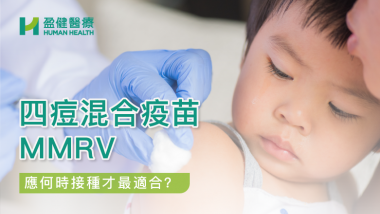 MMRV Priorix-Tetra Vaccine
 Why do I need to inject MMRV vaccine? Measles, Mumps, Rubella and Varicella are common child diseases that spread by airborne transmission of droplets from the respiratory tract. Among them, Varicella is caused by contact with vesicle fluids of the skin lesions. The disease may be complicated by encephalitis, or even fatal in severe cases. Young children should receive the first dose of MMRV Priorix-Tetra Vaccine at one year of age, followed by the second dose at 15 months to 6 years. Moreover, the side effects of the vaccine are mild.
2017.12.21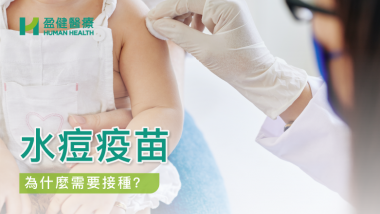 Varicella Vaccine
 What is Varicella infection? Varicella (also known as chickenpox) is a viral illness caused by the varicella-zoster virus. It is highly contagious and is spread by airborne transmission of droplets from the respiratory tract or from the vesicle fluid of the skin lesions of chickenpox or herpes zoster infection. Affected persons present with fever and itchy rash. The rash usually develops over 5 days with formation of vesicles and appears first on the scalp and face, moves to the trunk and then to the limbs. The rash occurs mainly over the trunk. The vesicles are itchy, and then dry up and form a scab in around 3 days. Affected persons usually recover in 2 to 4 weeks. Varicella is usually a mild disease of childhood. It is more severe in adults and in individuals of any age with impaired immunity. The disease may be complicated by skin infection, aseptic meningitis, encephalitis and pneumonia. Infection in early pregnancy may be associated with congenital malformation of the fetus. What is Varicella Vaccine? A. Why get vaccinated? Varicella vaccine can effectively prevent chickenpox infection. In Hong Kong, Varicella vaccine is included in the Hong Kong Childhood Immunisation Programme. B. When should my child get vaccinated? Children should receive two doses of Varicella vaccine. The first dose is given at one year of age. The second dose is given when the children reach primary one. C. The following individuals should NOT receive Varicella vaccine or should wait In the Maternal and Child Health Centres, the type of varicella-containing vaccine given to children is monovalent varicella vaccine. Persons who have the following condition should not receive the monovalent varicella vaccine or should wait: serious allergic reaction to a previous dose of Varicella vaccine known history of severe allergy to gelatin or certain antibiotics individuals with the following conditions: cancer on long term corticosteroids immunodeficiency moderate or severe acute illness received immunoglobulin or other blood products (e.g. blood transfusion) within the past 11 months received other live vaccines in the past four weeks untreated active tuberculosis family history of congenital or hereditary immunodeficiency pregnancy (women in reproductive age should avoid pregnancy for three months after vaccination) D. What are the side effects? In general, monovalent varicella vaccine is safe and well tolerated. Its adverse reactions include the following:- Local reactions, such as pain, redness and rash at the injection site. These are usually mild and self-limited. Systemic symptoms such as fever and generalised skin rash occur less frequently. Latent infections leading to herpes zoster have been reported but the majority of cases have been mild and have not been associated with complications. Children should avoid taking salicylates (e.g. aspirin) within 6 weeks after receiving varicella vaccine. Rarely, the varicella virus in the vaccine may transmit from vaccine recipients who develop a varicella-like rash to susceptible high-risk individuals (e.g. immunocompromised, pregnant women without immunity to chickenpox, newborn infants of mothers without immunity to chickenpox, all newborn infants born at less than 28 weeks gestation). However, it is not a contraindication for a child to receive varicella vaccine just because there is high risk individual in the same household. A pregnant mother or other household pregnant member is also not a contraindication for immunisation of a child in the household. No precautions are needed following immunisation of a child who does not develop a rash. However, if the child develops a rash post-vaccination, high risk individuals should avoid close contact with the child until the rash has resolved.
2017.12.6 Sciatica
 Many mothers in Hong Kong juggle work, childcare, and household chores daily, making them like superheroes who seem to do it all. However, prolonged repetitive work, physical strain during pregnancy, or a backward shift in center of gravity while walking can easily lead to sciatica. What exactly causes sciatica? What are the symptoms? How is it treated? And if pregnant, will it affect the baby? Let's explore these questions. How can you test if you have sciatica? Strictly speaking, sciatica is a symptom caused by nerve root compression due to herniated discs, degeneration, bone spurs, or deformities in spinal nerve canals. This results in pain originating in the lower back that radiates through the buttocks to the thigh or calf. Severe cases may cause numbness and weakness in the lower limb. Sometimes lower back pain is mistaken for a strain or sprain that typically resolves in 3–5 days. For recurring pain, the "straight leg raise" test helps identify sciatica. This test is also suitable for pregnant women up to 27 weeks. Straight Leg Raise Test (Modified Shovel Test)Lie flat on your back and lift one leg straight up. Normally, a person can raise their leg 60–90 degrees without pain. If pain occurs around 20 degrees of elevation, seek medical advice promptly. Can heat therapy effectively relieve pain?Many mothers worry about sciatica during pregnancy. Around 27 weeks, as the baby develops and body weight increases, added strain on the lumbar spine can cause sciatica. Generally, pain eases after the baby is born, so many mothers endure this discomfort. If you experience pain, inform your doctor early. Using a warm compress or soaking in warm water for 15 minutes can help. Also, try these gentle exercises to relax back muscles: Leg KicksSit on a chair and slowly kick one leg upward, feeling a stretch. Repeat 5 times, holding each kick for 10 seconds. Cat and Camel ExercisePlace hands straight on the ground, keep back level, knees bent on a mat. Slowly lift head, arching the spine forward and hold 3–5 seconds. Then slowly arch backward and hold 3–5 seconds. Repeat 6–10 times. Stop exercises immediately and consult a doctor if discomfort occurs. Hong Kong Registered PhysiotherapistThe information on this website is for educational purposes only.You should consult your doctor regarding surgical options and not rely solely on this information.
2016.12.22 Common misconceptions on scoliosis
 What is scoliosis? Can people with scoliosis exercise? Will having scoliosis affect fertility? Is carrying a heavy school bag the cause of scoliosis? Parents face many questions and often feel anxious and worried. Generally, scoliosis is not life-threatening, but daily care is important. It is a misconception that people with scoliosis should avoid exercise; in fact, they should exercise more. How is scoliosis defined?Scoliosis is defined as a spinal curvature of 10 degrees or more. Normally, the spine forms a straight vertical line, but signs such as uneven shoulders, asymmetrical ribs, uneven pelvis, or frequent neck and back pain indicate a high likelihood of scoliosis. Will scoliosis affect future fertility?Data shows females are more affected by scoliosis, about 80%, so parents often worry if it will affect fertility. The answer is no, provided the individual does targeted stretching and muscle strengthening exercises to prevent worsening of curvature angles. Scoliosis can cause fatigue and affect cardiopulmonary function. Its appearance may draw attention. After diagnosis, regular monitoring and strengthening of back and abdominal muscles to relax tight muscles are important, along with attention to posture. Wearing an orthotic brace may be necessary as corrective treatment. Should one see a chiropractor or physiotherapist?Both can treat scoliosis. Chiropractors focus on manual therapy, while physiotherapists emphasize exercise-based correction. They are not mutually exclusive; parents should choose trusted professionals. When is surgery needed? Mild: 10–25 degrees Moderate: 26–40 degrees Severe: over 40 degrees (surgery required) Advice:Scoliosis causes fatigue, cardiopulmonary impact, and visible deformity. Regular monitoring, back and abdominal muscle strengthening, posture awareness, and orthotic braces if required are crucial. Hong Kong Registered PhysiotherapistThe information on this website is for educational purposes only.You should consult your doctor regarding surgical options and not solely depend on this website.
2016.12.2