
Education Corner
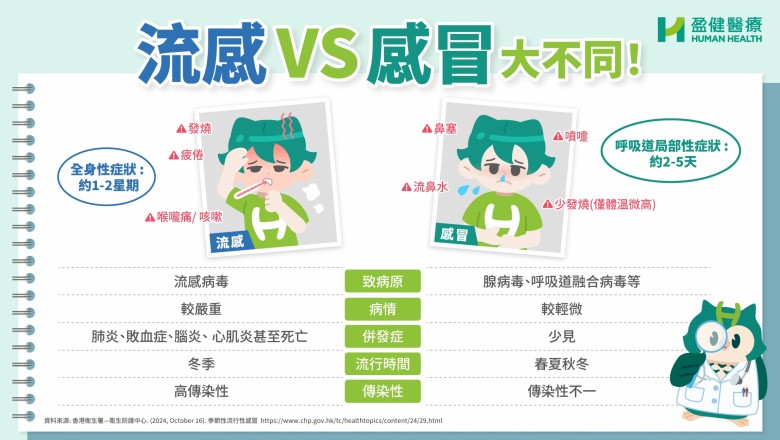
Both the common cold and influenza (often called the flu) are respiratory infectious diseases, but they are caused by different viruses. In general, flu symptoms appear more suddenly and are more severe than those of the common cold. The flu can also lead to more serious complications. People with a common cold typically have symptoms like a runny nose, while those with influenza are more likely to develop severe complications such as pneumonia or bacterial infections, which may even require hospitalization.
Therefore, getting the flu vaccine is an important measure to prevent influenza and its complications.
 Influenza | Vaccination | Flu
 Seasonal Influenza Vaccination What is Influenza? Influenza (also known as the flu) is an acute infectious disease caused by viruses from the influenza virus family. It spreads worldwide and is transmitted through droplets.Common symptoms include fatigue, sudden fever, runny nose, cough, headache, muscle pain, and sore throat. Severe cases can lead to respiratory failure or even death. Influenza viruses are divided into three main types: A, B, and C.Types A and B account for most infections. Major outbreaks are usually linked to type A viruses, while type B epidemics occur less frequently at several-year intervals.Type C infections are typically milder and rarely cause epidemics. Influenza viruses constantly mutate.Each year, the World Health Organization (WHO) reviews and recommends the composition of the next season’s vaccine. Because flu seasons differ between hemispheres, recommendations are issued at different times: For the Northern Hemisphere: Announced in February/March to ensure updated vaccines are available before the winter flu season (late in the same year or early the next year). For the Southern Hemisphere: Announced in September of the preceding year to prepare vaccines for the following winter (around June/July). Why is it Important to Get a Seasonal Influenza Vaccine? Influenza cases occur year-round in Hong Kong, but are most common from January to March/April and July to August.People with weaker immune systems and the elderly are at greater risk of severe illness and complications such as bronchitis, pneumonia, or encephalopathy, which may result in death. Vaccination is one of the most effective ways to prevent seasonal influenza and its complications, reducing hospital admissions and deaths.It can also help lower the risk of severe illness and hospitalization for those who might contract both influenza and COVID-19 at the same time. When Should I Get the Seasonal Influenza Vaccine? It takes about two weeks after vaccination for the body to develop protective antibodies.To ensure adequate protection, vaccination should be done at least two weeks before the flu season begins—typically in January in Hong Kong.However, vaccination is still beneficial even after the season has started. What Are the Possible Side Effects of the Inactivated Influenza Vaccine? The inactivated flu vaccine is very safe.Common mild effects include pain, redness, or swelling at the injection site. Some people may experience fever, muscle aches, or fatigue 6–12 hours after vaccination, which usually subsides within two days.If persistent fever or discomfort occurs, consult a doctor. Rare serious allergic reactions—such as hives, tongue or throat swelling, or breathing difficulty—require immediate medical attention.Other rare adverse events include Guillain–Barré Syndrome (GBS) (about 1–2 cases per million vaccinations) and severe allergic reactions (about 9 cases per 10 million doses distributed).However, there is no proven causal link between vaccination and these events.Research shows that the risk of developing GBS after influenza infection (17.20 cases per million infections) is much higher than after vaccination (1.03 cases per million vaccinations).[The Lancet Infectious Diseases, 2013 Sep; 13(9): 769–76] Who Should Not Receive the Inactivated Influenza Vaccine? Anyone who has had a severe allergic reaction to a vaccine component or after a previous flu vaccination should not receive it. People with mild egg allergies can safely receive the vaccine at primary healthcare facilities. Those with severe egg allergies should be vaccinated under professional supervision in medical settings equipped to handle allergic emergencies. Although the vaccine contains trace amounts of ovalbumin (egg protein), the purification process reduces the content to very low levels, making it safe for most people with egg sensitivity. Patients with bleeding disorders or those taking anticoagulants should consult a doctor before vaccination.If you have a fever on the vaccination day, it is best to wait until recovery before receiving the vaccine. Do I Need to Get the Flu Vaccine Every Year? Yes.Because influenza virus strains change frequently, vaccine formulations are updated annually based on circulating strains.Immunity from last season’s vaccination declines over time and may no longer provide sufficient protection the following year.For example, the 2021–22 seasonal vaccine components differed from those of 2020–21. Can Pneumococcal and Influenza Vaccines Be Given Together? Yes.Pneumococcal and seasonal influenza vaccines can be given during the same visit.If using the inactivated influenza vaccine, separate syringes and injection sites should be used. Can the Influenza Vaccine Be Given Together with the COVID-19 Vaccine? No—the vaccines should be administered at least 14 days apart.This applies to both BioNTech and Sinovac (CoronaVac) COVID-19 vaccines.
2020.11.6 Hib (PedvaxHIB Amp) Vaccine
 What is Haemophilus influenzae type b(Hib)? Haemophilus influenzae type b(Hib) is mainly transmitted through direct contact with nose or throat secretion of an infected person. It is a kind of bacteria that can cause serious invasive diseases, which usually affects young children. Haemophilus influenzae type b(Hib) does not cause influenza or flu. In contrary, it commonly presents as meningitis (infection of membranes covering the brain), often accompanied by germ entering the bloodstream. It may also affect other parts of the body, such as the lungs, epiglottis (upper part of the throat), etc. Meningitis can lead to symptoms such as fever and nausea; while epiglottitis can cause symptoms such as drooling and difficulty in breathing. How to prevent Haemophilus influenzae type b(Hib)? It is suggested that infants should receive a total of 4 Hib vaccinations respectively at 2 months, 4 months, 6 months and 18 months after birth, so as to induce development of antibodies in the body and provide protection against bacterial infection.
2018.12.21 How many types of flu vaccines are there? Is the trivalent one enough? Is the quadrivalent one enough?
 The influenza vaccine has always been quadrivalent, but in recent years, a trivalent vaccine has emerged. What's the reason? We asked Dr. Li Xuan to explain. "Why the change to trivalent?" According to the World Health Organization, the Yamagata lineage B virus (one of the monovalent) is no longer circulating in the human population. While the WHO still recommends four influenza vaccines, it has changed its recommendation to "trivalent provides adequate protection." In light of this, the Hong Kong Center for Health Protection will also change its recommendation from "quadrivalent" to "trivalent or quadrivalent" starting in 2024/25. Citizens can choose to receive either influenza vaccine based on their needs. * "Is quadrivalent effective?" Generally speaking, a higher vaccine valence indicates wider coverage. However, since one of the viruses is considered "extinct" by WHO standards, even if antibodies are injected into the body, they are virtually ineffective and will not increase the risk of illness. However, depending on the formulation of each vaccine brand, the target population varies, so quadrivalent influenza vaccines are still available. The government provides free influenza vaccinations to eligible individuals each year. Eligible individuals* and those who have successfully registered for eHealth^ can receive government-subsidized vaccinations. For more details on the subsidy, please visit the following link:https://humanhealth.com.hk/zh-hant/Gov-funded-Programme/details/vssv-flu-vaccination ^New subsidy conditions for the 2025-26 fiscal year. For more details on the Vaccine Subsidy Scheme, please refer to the following link: https://humanhealth.com.hk/zh-hant/Gov-funded-Programme/details/vssv-flu-vaccination Whether receiving the trivalent or quadrivalent vaccine, getting the latest seasonal influenza vaccine as early as possible each year is the most important preventive measure. Both vaccines effectively reduce the risk of influenza infection and serious complications. For more information on various flu vaccines, please visit the following link: https://mall.humanhealth.com.hk/collections/flu-vaccine If you have any further questions about flu vaccines, please feel free to leave a message or send us a message via WhatsApp.
2025.9.22